RICTAT Colonic Hydrotherapy & Professional Colonic Training with Tracy Johnson
The Treatment Rooms, Skelmersdale, Lancashire | Advanced RICTAT Practitioner & RICTAT Trainer
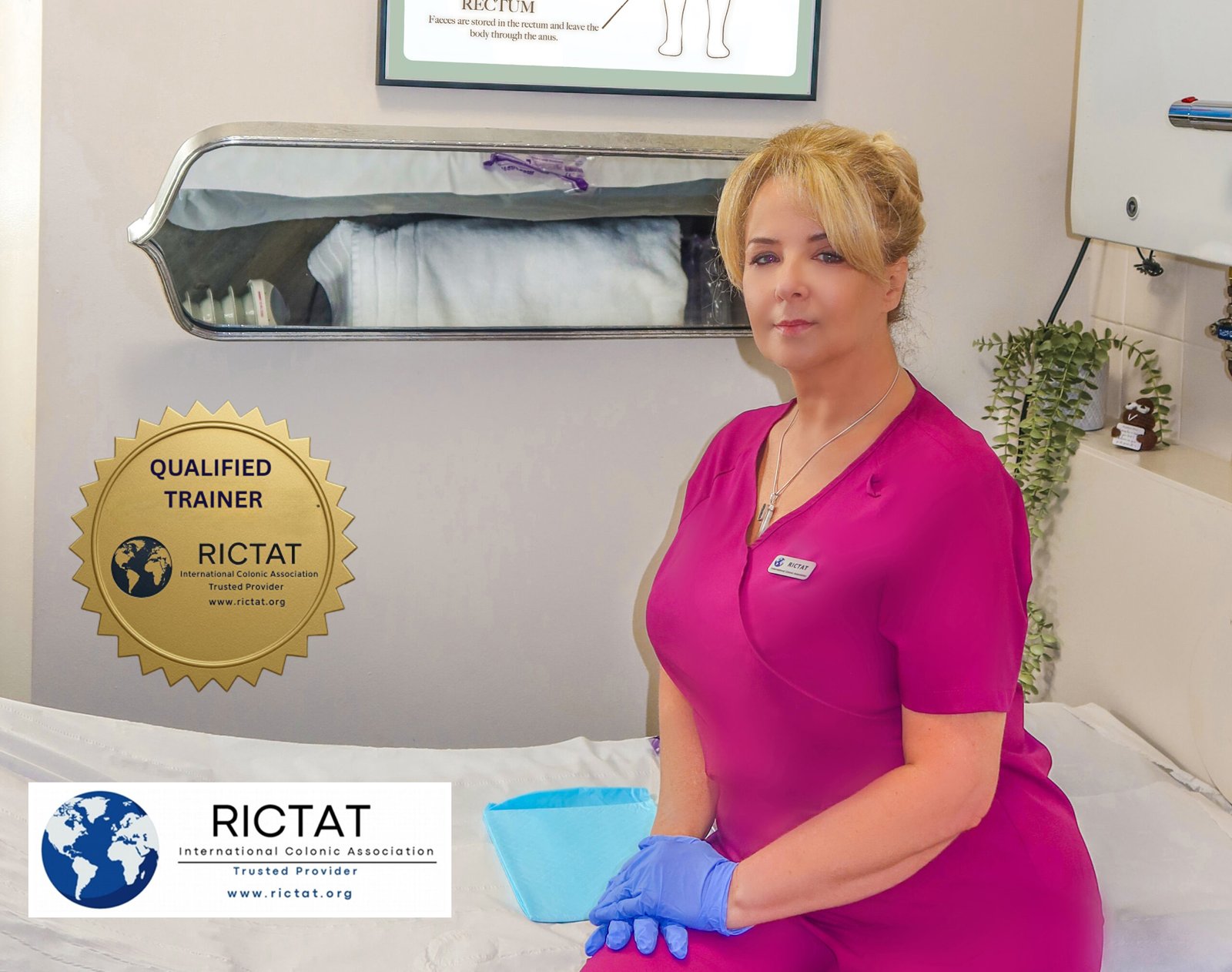
Train with Tracy Johnson through a supportive, mentorship-led Colon Hydrotherapy Training
pathway designed to help you become a confident, safe and compassionate practitioner.
– RICTAT-recognised training pathway
– Online theory and practical clinical training
– Real client experience and supervised practical sessions
– Ongoing mentorship beyond qualification
Learn from an experienced practitioner who provides both professional treatments and mentorship-led training.
For Students
Become a qualified Colon Hydrotherapist through Tracy’s RICTAT-recognised training pathway
For Clients
Book professional Colon Hydrotherapy appointments at The Treatment Rooms
Why Choose The Treatment Rooms
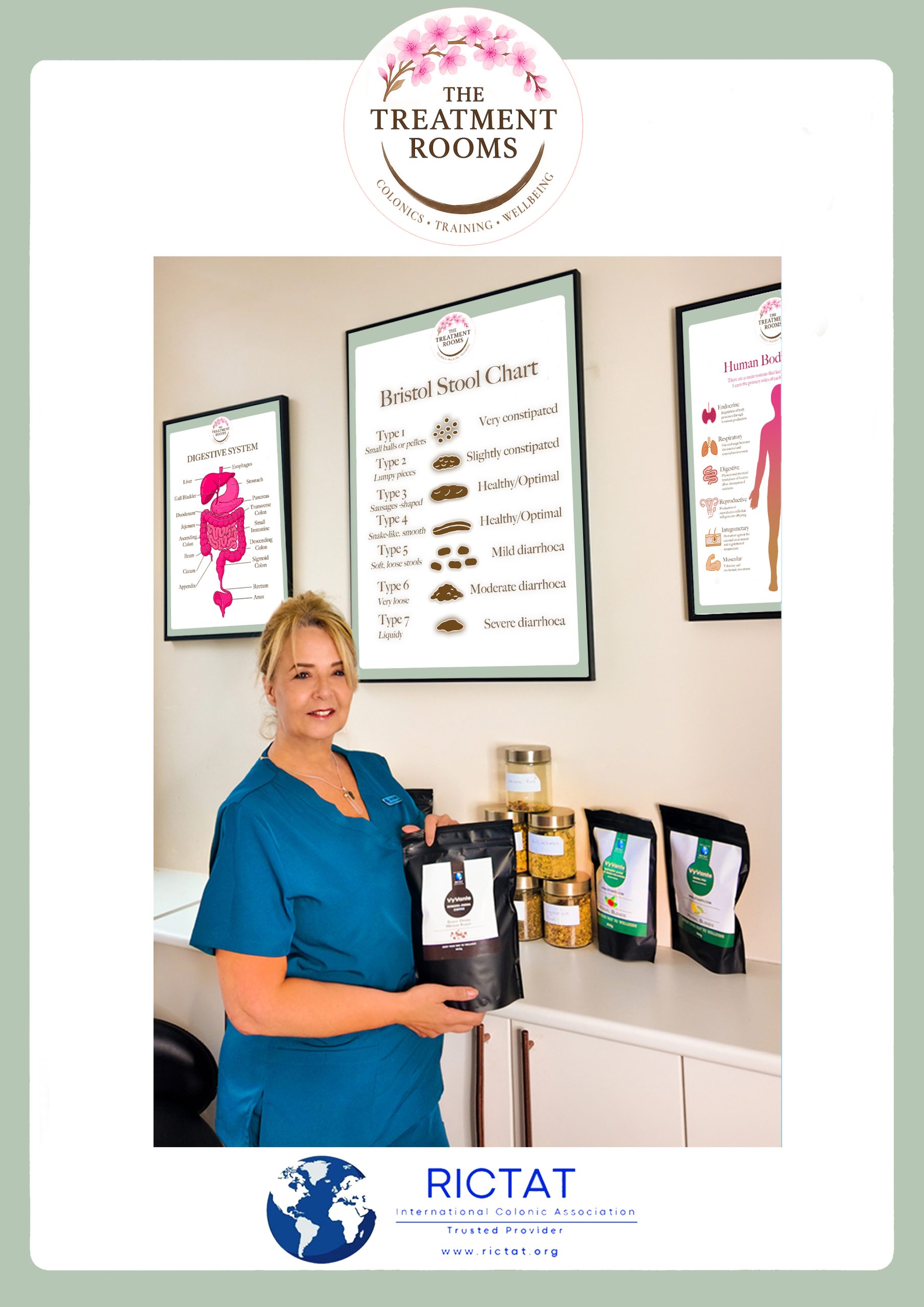
Tracy Johnson is an Advanced RICTAT Colonic Hydrotherapist providing professional colonic hydrotherapy treatments at The Treatment Rooms in Skelmersdale, Lancashire.
Colonic hydrotherapy uses warm, filtered water to gently cleanse the colon in a private, professional treatment setting.
Every appointment is tailored to the individual, with time to discuss your bowel habits, digestive concerns, treatment suitability and what to expect during your appointment.
If you are new to colonic hydrotherapy, visit Tracy’s Colonic Hydrotherapy Q&A to learn more about the treatment, preparation, what happens during an appointment, contraindications and aftercare.
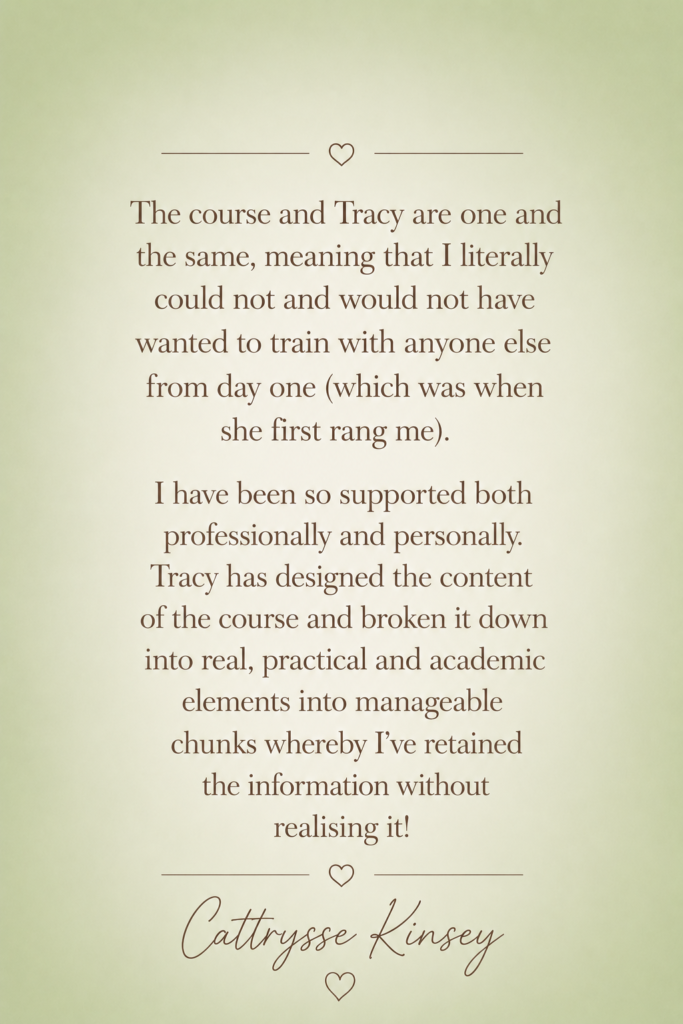
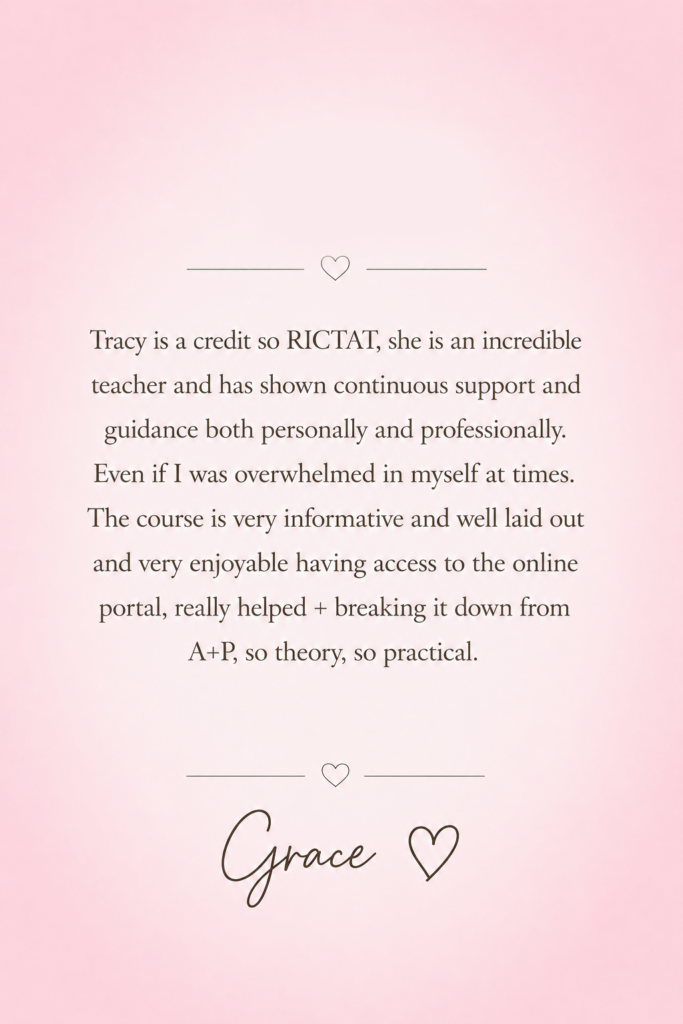
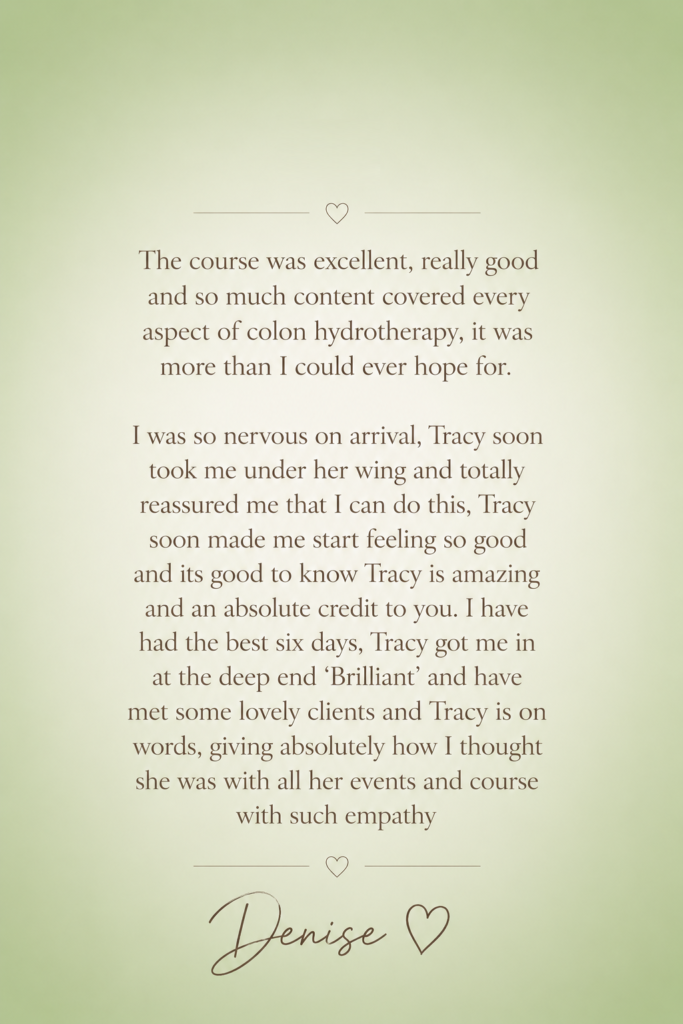
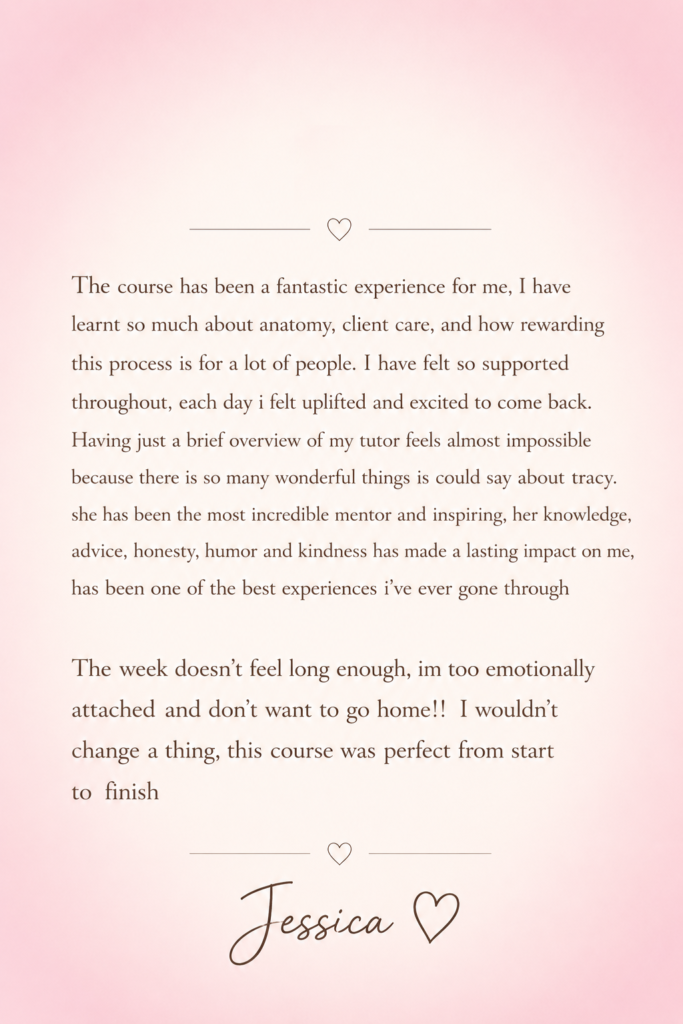
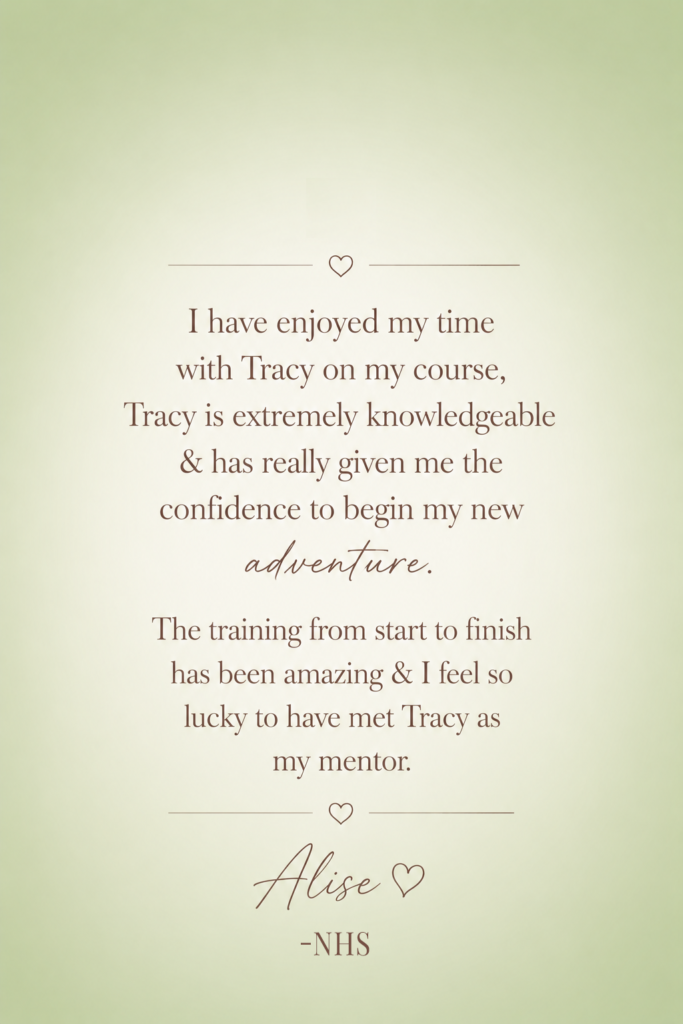
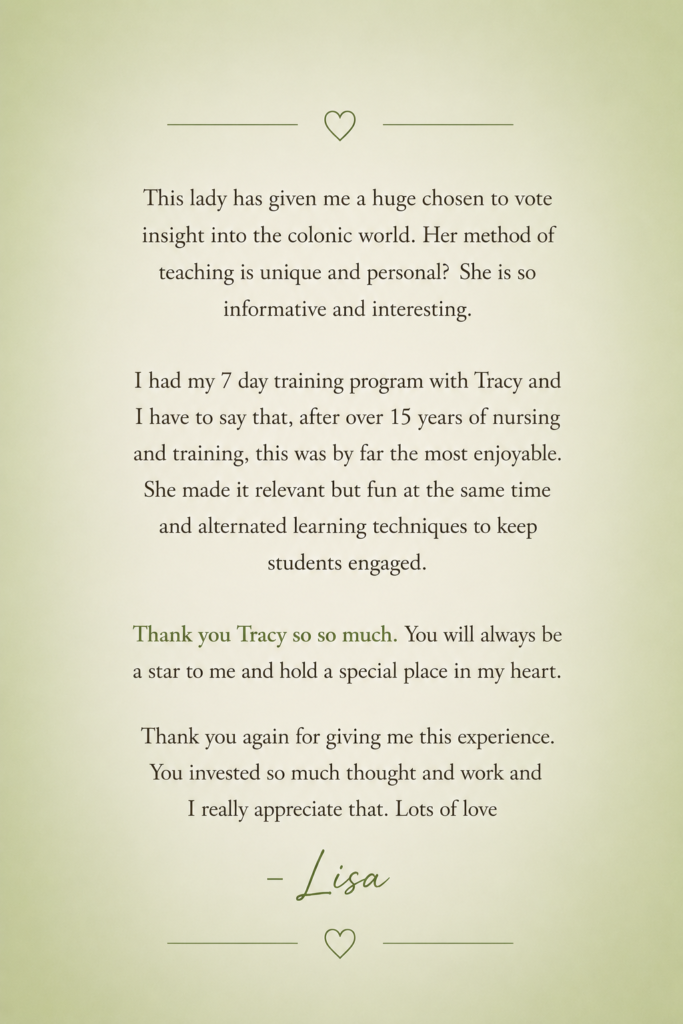
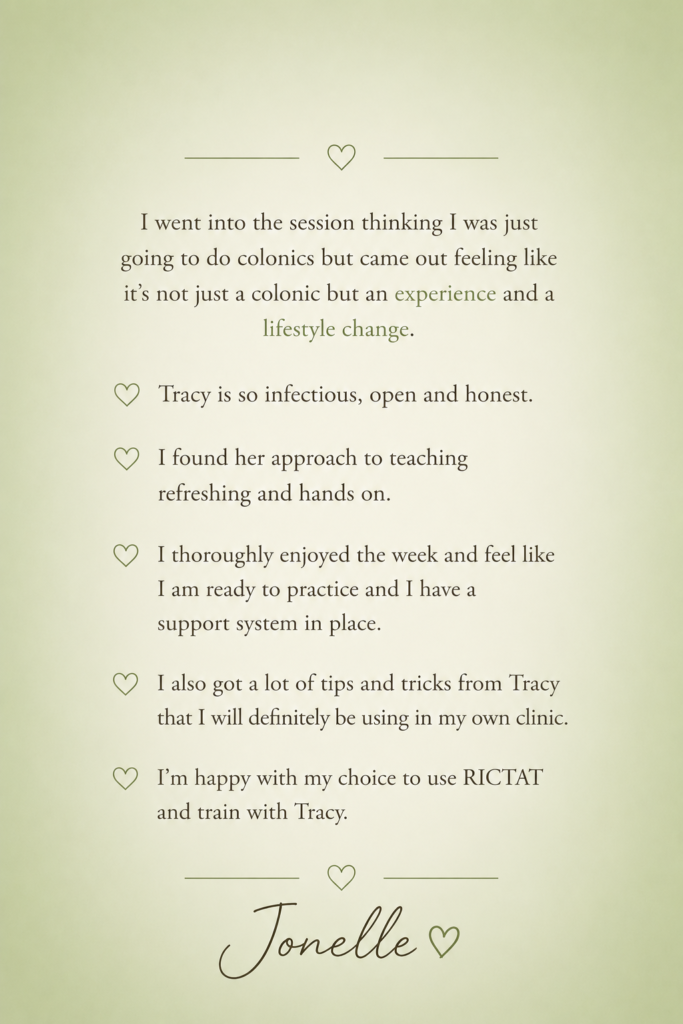
Training Testimonials



Do you have any questions?
Do I need previous experience to train in Colon Hydrotherapy?
No previous colon hydrotherapy experience is required.
Many students come from complementary therapy, wellness, beauty, healthcare, nursing, fitness, or completely different professional backgrounds.
The training is designed to guide students step-by-step through both the theoretical and practical aspects of becoming a professional practitioner.
Do I need an Anatomy & Physiology qualification?
Yes. Students are required to hold a recognised Anatomy & Physiology qualification before progressing into practical clinical training.
If you do not already hold this qualification, guidance can be provided regarding suitable approved pathways.
Is the training RICTAT recognised?
Yes. Training is delivered through a RICTAT-recognised training pathway and follows professional industry standards.
RICTAT is one of the UK’s recognised professional associations for Colon Hydrotherapy training and practitioner standards.
How is the theory training delivered?
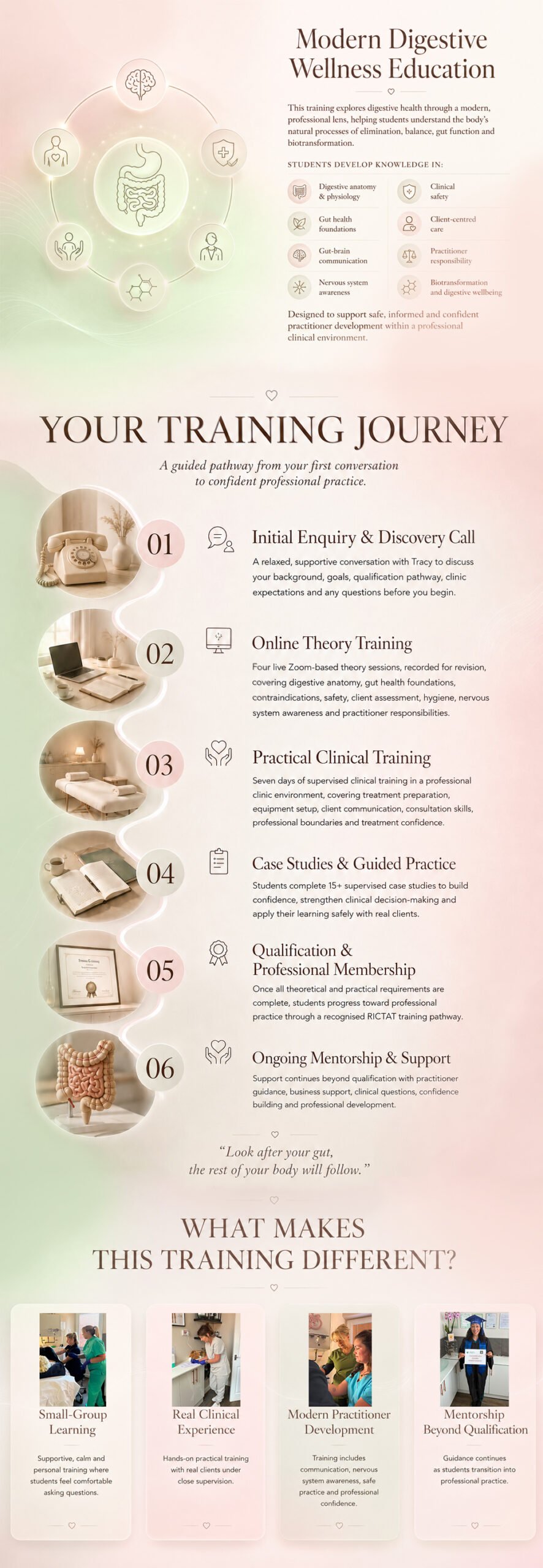
The theoretical element of the Foundation programme includes a 12-module Online Learning Portal, a 12-module Colonic Hydrotherapy Foundation Training Manual and four full-day live Zoom teaching sessions.
Students also receive:
- Coursework and section-based assignments
- Recorded sessions for revision and additional support
Theory training provides the academic and professional foundation required before entering practical clinic training.
What happens during practical training?
Practical training takes place within a professional clinical environment under close supervision and mentorship.
Students are guided through:
- Treatment preparation
- Equipment setup
- Consultation skills
- Client communication
- Clinical observation
- Treatment procedures
- Professional conduct
- Case study guidance
Students will also work with real clients during practical clinic training to help develop confidence, professionalism, and hands-on clinical experience within a supported environment.
Students attend seven in-person practical training days and complete a minimum of 15 supervised client sessions, including observation. These sessions help students gradually develop practical understanding, client communication, treatment confidence and professional competency within a supported clinical environment.
The focus is on helping students build confidence gradually within a supportive learning environment while developing the skills required to work safely and professionally in clinical practice.
How long does the qualification process take?
Training timelines can vary slightly depending on individual progression, practical availability, and completion of coursework and case studies.
Students are supported throughout the process and guided step-by-step toward qualification and professional practice.
Will I feel confident working with clients after training?
Confidence building is a key part of the training journey.
The programme is designed not only to teach practical skills, but also to help students develop:
- Professional communication
- Clinical confidence
- Client care skills
- Practitioner awareness
- Safe working practices
Ongoing mentorship and support are available throughout training and beyond qualification.
What support is available after qualification?
Students continue to receive ongoing guidance and practitioner support after qualification.
Support may include:
- Practitioner mentoring
- Clinical guidance
- Professional development
- Business support
- Confidence building
- Continuing education opportunities
The aim is to help students transition into professional practice feeling supported and prepared.
Can I open my own clinic after qualifying?
Yes. Once qualified and professionally insured, students may progress into professional practice and establish their own clinic environment.
Guidance can also be provided around professional standards, client care, clinic setup, and practitioner responsibilities.
How much does the training cost?
The full training investment is £3,500.
This includes:
- Online theory training
- Practical clinical training
- Learning materials
- Online learning portal access
- Case study guidance
- Professional mentoring
- Qualification support
Training is divided into theory and practical stages to help students progress comfortably through the qualification process.
How are payments structured?
Training payments are divided into two stages.
Online Theory Training — £1,250
Theory fees are payable in full six weeks prior to your selected theory start date.
Practical Clinical Training — £2,250
Practical training fees are payable one month prior to the commencement of your practical clinic dates.
Flexible instalment arrangements may be available depending on training dates and availability.
Are payment plans available?
Flexible instalment arrangements may be available depending on training dates and availability.
If you would like to discuss payment options, upcoming course dates, or suitability for training, please get in touch for an informal conversation.
What makes this training different?
This training is designed to provide more than a qualification alone.
The focus is on helping students become safe, confident, and professional practitioners through:
- Small-group mentorship
- Clinical guidance
- Nervous system awareness
- Professional communication
- Real-world practitioner development
- Ongoing support throughout the training journey
The aim is to create confident practitioners who feel fully prepared to work safely and compassionately with clients.
Where can I train as a colonic hydrotherapist in North West England?
RICTAT-recognised colonic hydrotherapy training is available with Tracy Johnson at The Treatment Rooms in Skelmersdale, Lancashire, North West England. The Foundation programme combines online theory and live teaching with seven days of supervised practical training in a working clinic, including experience with real clients.
EXCELLENT Based on 7 reviews
 Posted on Google
 KMSTracy is an amazing trainer, a beautiful human being who adapts her teaching methods to suit each student and is absolutely amazing at what she does! Highly recommend if you want to train in colonicsPosted on Google
 Rachael WilsonCouldn’t recommend enough! The knowledge and experience Tracy has is immense and she talked me through the whole process. Not just the procedure but the ins and outs of how food gets from mouth to poo and the impacts to your skin and body. I’ve felt awful for a while, bloated / sluggish / skin outbreaks / general crapiness but after just one session today I feel 100% better. I’m booking back in for a weekly session to get my body right back on track! Thanks again Tracey!Posted on Google
 CharlotteI have had the most amazing training experience here at Treatment Rooms. I cannot recommend Tracy enough. Under RICTAT guidelines I have learned the most amazing effective techniques in Colonic Hydrotherapy. I have been mentored and supported throughout the whole thing and now I am able to flourish in my new path. I am ever thankful to Tracy at The Treatment Rooms. She is an amazing lady with a kind heart and a fountain of knowledge. If training in colonic hydrotherapy is something you are considering as a new venture, this is where you should train. Thank you Tracy. I am very excited for the future and have gained a life long friend.Posted on Google
 Daniela SadlerTracy is a warm and welcoming perodn and on arrival she was so friendly. She is full of so much knowledge and was able to answer all my questions. Her positive character is contagious and uplifting. She encouraged me and gave me great advice. Thank you for your training me. Looking forward to training with you again. Highly recommend!Posted on Google
 Liz BurkittI completed the herbal & coffee enema training with Tracy and Erica. The course was really well delivered and extremely thorough. I came away with a lot of information and can't wait to get started. I would highly recommend this course to anyone thinking about adding more to their range of treatments. Thank you again 🙏🏻Posted on Google
 Loren HatchEnjoyed the course, did a good deal of practical. Both Tracy and Erica made it a very relaxed atmosphere and were both always ready to answer any questions.Posted on Google
 Tracey LambeHighly recommend training with Tracy, she is very knowledgeable and provides clear guidance on the benefits and techniques needed to be a better colon hydrotherapist. Thank you for a great day.